What You’ll Gain from This Blog
- Understand the roots of traditional Emirati food and culture
- Discover must-try authentic Emirati dishes in Dubai
- Learn the key ingredients and cooking styles that define Emirati cuisine
- Find the best restaurants in Dubai for local Emirati food
- Get helpful context to enjoy Emirati cuisine as a visitor
Dubai is celebrated for its global dining scene, but beneath its international restaurants lies a deeply rooted culinary tradition shaped by desert life, trade routes, and Bedouin culture. Emirati food reflects simplicity, nourishment, and hospitality, using slow cooking methods, aromatic spices, and ingredients suited to the region’s climate.
For visitors, finding authentic Emirati food in Dubai can be challenging amid the city’s vast food options. This guide focuses on traditional Emirati dishes you should try, the cultural context behind them, and reliable restaurants where these recipes are prepared authentically.
So, come, let’s take a closer look at the Emirati food in Dubai and the culture it represents.
Understanding Emirati Traditional Food and Emirati Culture
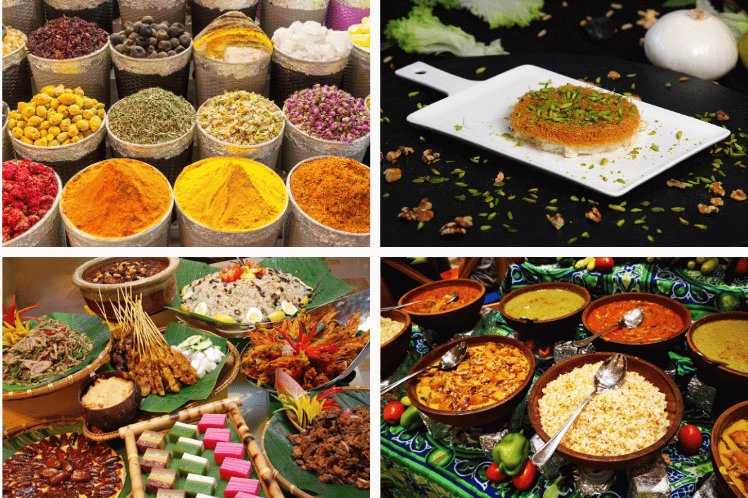
Emirati food refers to the traditional cuisine of the United Arab Emirates (UAE), reflecting the country's rich history and diverse cultural influences. Emirati cuisine is characterized by the use of spices, herbs, and ingredients that are native to the Arabian Peninsula and influenced by the trade routes that historically passed through the region.
The business hub Dubai attracts visitors from all around the globe. This is why Dubai's popular food list often reflects a blend of various cultures. Making it hard for tourists to discover authentic Arabic cuisine.
But worry not! We are here to tell you the secrets to identifying original local Emirati food. As well as give you an insight into the background and culture that shaped the base of the cuisine.
The basic ingredients that make up the Emirati food are:
-
Complicated carbohydrates:
- Emiratis love meat, cereals, and dairy items. This rich usage of carbohydrates has a strong connection to their past. Wondering what? Well, the Emirati ancestors used to travel a lot under extreme weather conditions. Hence they needed high-energy carbs.
- The dishes also feature fewer vegetables. Of course, the reason is obvious- the desert.
-
Single pot delicacies:
- Desert climate demands reducing the daily usage of water. This is why you will find many single-pot authentic foods in Dubai such as stews.
-
Diverse ingredients:
- The people of the Emirates rely on aromatic spices to enhance the flavour aspect. In the past, they added leaves from indigenous trees. Today their food consists of core spices like:
- Saffron
- Cardamom
- Turmeric
- Garlic
- Coriander
- Thyme
- Dates
- Dates were a must-have ingredient in Emirati traditional food. In earlier times, they had it with every meal. While this was done to satisfy the sweet cravings, it was also their way of paying homage to Muhammad. In present times, too, you will find many Emirati desserts containing dates, mostly in the form of syrup and pastes.
- The people of the Emirates rely on aromatic spices to enhance the flavour aspect. In the past, they added leaves from indigenous trees. Today their food consists of core spices like:
List of top Emirati foods in Dubai that you must try
1. Al Harees
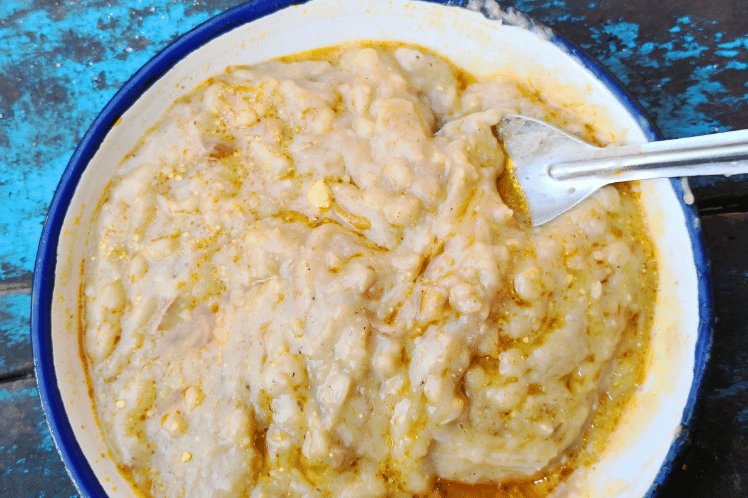
The famous Emirati traditional food Harees resembles a porridge. It is made with beaten wheat and minced meat, mostly lamb or chicken. Topped with beautiful garnishes of cinnamon, sugar, raisins, pistachio, etc.
Nutrition Snapshot:
Approx. calories: 350–400 kcal per 300 g serving
Why: Made with whole wheat and slow-cooked meat, Harees is high in complex carbohydrates and protein, making it filling and easy to digest.
History
Caliph Muawiya of Damascus made the dish to celebrate the delegation of the Arabian Yemenis. This transformed Harees into a welcome nourishment in every household.
Why is it popular and significant?
Harees is a favourite dish during Ramadan. Thanks to its filling, simple ingredients, rich and comforting taste, nutrient-packed, and easy on the stomach, it is a must to be served on special occasions.
Where to find Al Harees?
- Al Fanar Restaurant & Cafe
- Seven Sands
- Aseelah
2. Machboos
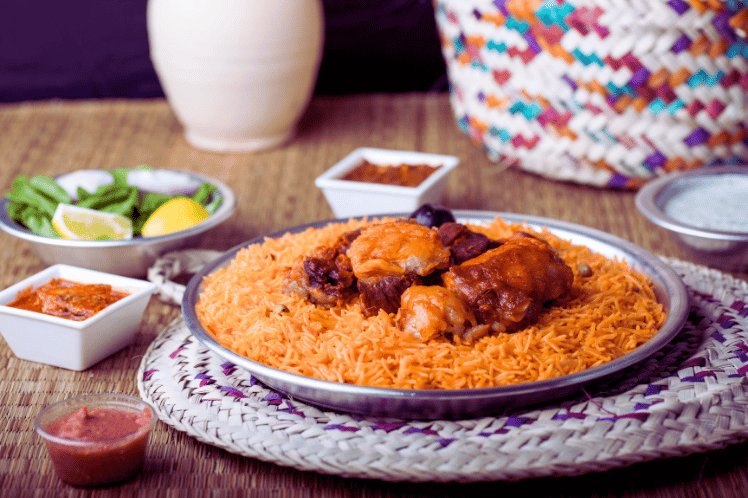
Regarded as the national dish of the UAE, Machboos is a one-pot wonder. The texture of the dish is similar to biryani or paella. The base includes rice and proteins like red meats, shrimp, or fish. Dried lemon is a key component here together with harmonious spices.
Nutrition Snapshot
Approx. calories:
- Chicken: 450–500 kcal per 300 g serving
- Lamb: 550–600 kcal per 300 g serving
Why: Rice-based and spice-rich, Machboos is a hearty, energy-dense dish often enjoyed as a complete meal.
History
Machboos go beyond the borders of the UAE. For eg, Kuwait its inception traces back to the period of Bedouin tribes in the Arabian Peninsula. They needed hearty meals that could be cooked on an open fire. Thereby giving birth to the generous Machboos.
Why is it popular and significant?
Be it the feeling of community and shared heritage ,it evokes thanks to the varied family recipes. Or the depth of flavour, Machboos is a cult favourite authentic food in Dubai. Because of its simple making procedure and rich flavours, it has become a staple dish in most households.
Where to find Machboos?
- Al Fanar Restaurant & Cafe
- Seven Sands
- Local Festivals and Cultural Events
3. Balaleet
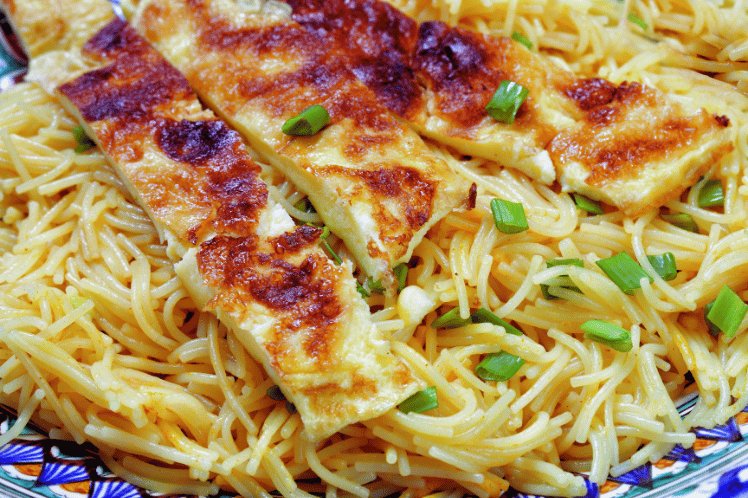
The sweet and savoury Balaleet is a vermicelli noodle recipe. Infused with cinnamon, sugar, saffron, cardamom, and rose water. When served with breakfast, it is paired with an omelette or scrambled eggs.
Nutrition Snapshot:
Approx. calories: 380–420 kcal per 250 g serving
Why: The combination of sweet vermicelli, sugar, and eggs makes Balaleet moderately high in carbohydrates and fats, ideal for breakfast or a light dessert.
History
The merchants of the Middle Ages brought vermicelli to the Emiratis. And, when the latter started experimenting, Balaleet came to life.
Why is it popular and significant?
The interesting fusion of flavours is a unique feature of Balaleet. You can have it both as a breakfast and dessert.
Where to find Balaleet?
- Logma
- Local Cafes and Bakeries
4. Luqaimat
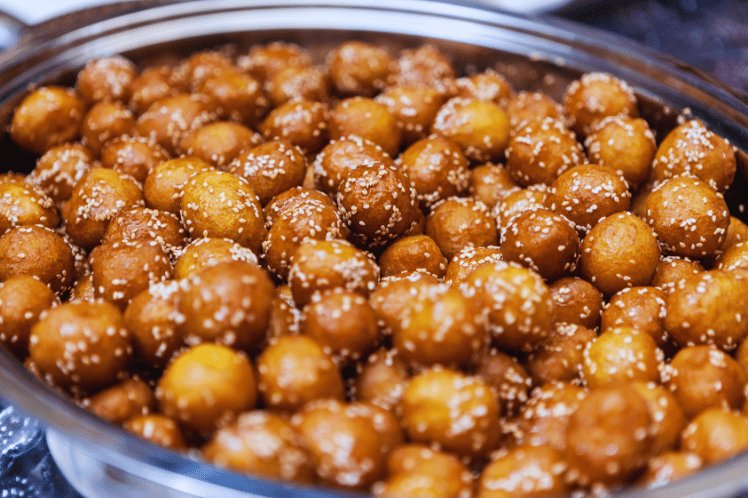
Luqaimats are deep-fried dumplings with a crunchy outside and soft inside. Raw materials include milk, butter, flour, sugar, spices, cardamom, and saffron. At the end, they are showered with date molasses and embellished with sesame seeds.
Nutrition Snapshot:
Approx. calories: 300–350 kcal per 100 g (5–6 pieces)
Why: Deep-fried and drizzled with date syrup, Luqaimat is rich in sugars and fats, meant to be enjoyed in small portions.
History
Luqaimat, which is described as “small bites” mirrors the hospitality of the Bedouin tradition. They gathered together and made simple yet delicious treats. Out of which the modest Luqaimat was a mainstay.
Why is it popular and significant?
The additive essence of Luqaimat has made it a top dish during Ramadan and other special events. It symbolises abundance, generosity, and connection. They are a staple during Ramadan, served to break the fast, and are often prepared for celebrations and family events.
Where to find Luqaimat?
- Arabian Tea House & Cafe
- NEEM
- Local House
5. Khameer

Chebab is a traditional Emirati pancake, often described as a softer, richer version of a crepe. Made with eggs, flour, and milk, it is delicately flavoured with saffron and cardamom, giving it a warm golden colour and subtle aroma. Chebab is typically served with date syrup (dibs) or cheese and is commonly enjoyed for breakfast or as a light snack.
Nutrition Snapshot:
Approx. calories: 280–320 kcal per serving
Why: Yeast-based and lightly sweetened, Khameer provides quick energy and pairs well with cheese or honey.
History
Chebab has long been part of Emirati home kitchens, especially as a morning staple. Traditionally prepared fresh on a hot griddle, it reflects the Emirati preference for simple, nourishing foods made with minimal ingredients. Over time, Chebab became a familiar sight at local cafés and heritage restaurants, preserving its place in everyday Emirati food culture.
Why is it popular and significant?
Chebab’s popularity comes from its comforting taste and versatility. It is easy to prepare, light on the stomach, and suitable for all age groups. Whether paired with sweet date syrup or savoury cheese, Chebab offers a balanced start to the day and represents the understated elegance of Emirati breakfast traditions.
Where to find Khameer?
-
Arabian Tea House & Cafe
6. Knafeh
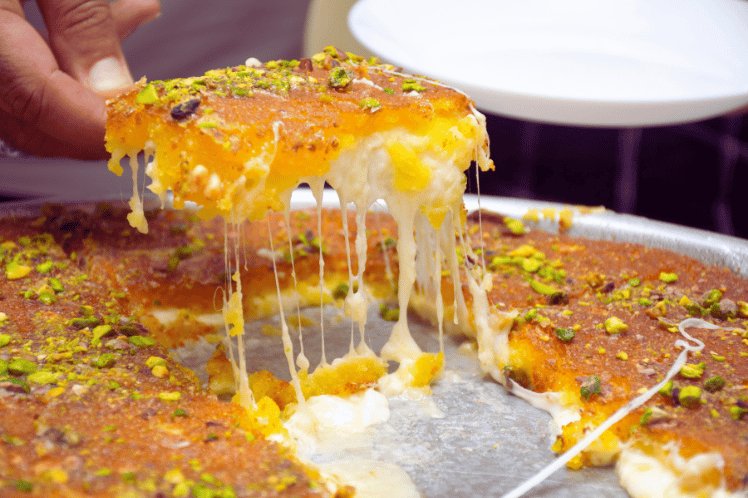
Knafeh is a sticky pastry dessert made with gooey and soft sweet cheese. It is baked using shredded phyllo dough. Followed by a final soak in a syrup to get the desired sweetness.
Nutrition Snapshot:
Approx. calories: 450–500 kcal per 150 g slice
Why: Made with cheese, butter, and sugar syrup, Knafeh is indulgent and calorie-dense — perfect as an occasional treat.
History
The Palestinian city of Nablus is believed to be the birthplace of Knafeh by many. However, as per some reports, it runs back to the Umayyad dynasty. While a few others state that 15th-century Egypt is its origin.
Why is it popular and significant?
Knafeh has become a part and parcel of Dubai’s culinary universe courtesy of its intense taste. After all, a slice of warm Knafeh can make you fall for it over and over again.
Where to find Knafeh?
- Logma
- Arabian Tea House
7. Thareed
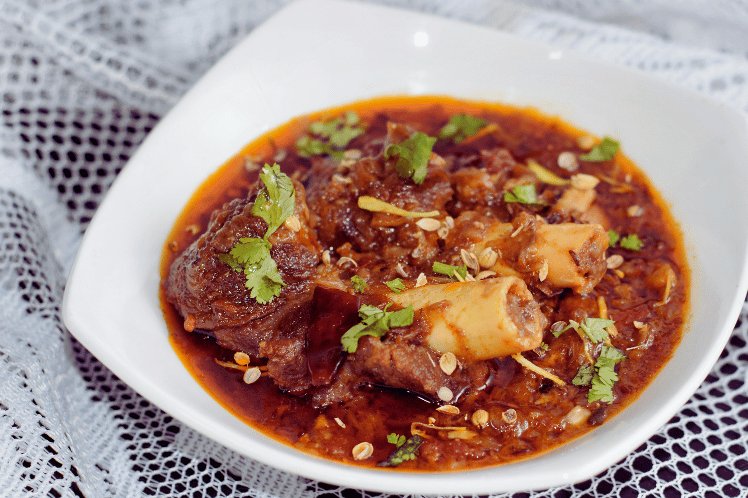
Thareed is a rich stew that contains a wide variety of elements. From potatoes and seasonal vegetables to meat components like chicken, goat, or lamb. The moistened broth combines well with crumbled bread to make a complete dish.
Nutrition Snapshot:
Approx. calories: 400–450 kcal per 300 g serving
Why: Combining vegetables, meat, and bread soaked in broth, Thareed offers a balanced mix of protein, carbs, and nutrients.
History
Thareed, a staple in Arab culture, has its origins in Mecca, Saudi Arabia. It is also believed to have been the favourite delicacy of the Islamic prophet Muhammad.
Why is it popular and significant?
Thareed, being full of vitamins and proteins, is a filling Emirati food. It is hence a preferred choice during many special occasions. For example, breaking the fast during Ramadan or Iftar.
Where to find Thareed?
- Aseelah
- Local House
8. Madrouba
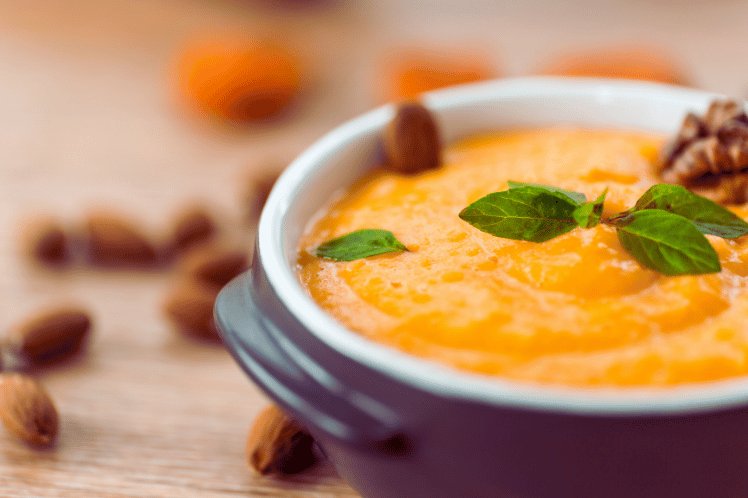
Madrouba, the popular Emirati food in Dubai, is an authentic porridge recipe. It contains rice and meat as key ingredients. While garlic, onions, curds, tomatoes, and other seasonings work as flavour boosters.
Nutrition Snapshot:
Approx. calories: 380–420 kcal per 300 g serving
Why: A soft, porridge-like dish rich in rice and protein, Madrouba is nourishing and gentle on the stomach.
History
The name Madrouba comes from the term “Darb” in Arabic. And no point in guessing, the recipe includes beating the mixture into a smooth mash.
Why is it popular and significant?
The USP of Madrouba lies in its flexibility. Chicken Madrouba may be a strong favorite, but the dish can be served with other ingredients too. Crushed grains, lamb, and fish to name a few. Also, no two Madrouba tastes are identical. To top it all, the dish can be easily digested and is perfect for all age groups.
Where to find Madrouba?
- Al Fanar Restaurant & Cafe
- NEEM
9. Karak Tea
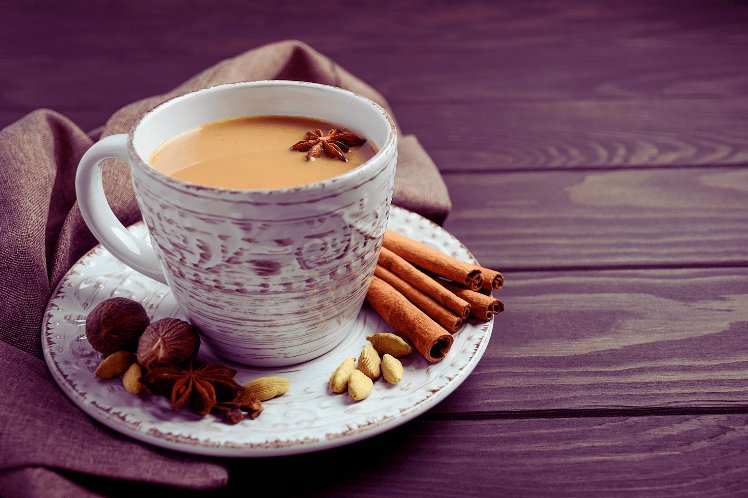
Yes, the UAE's favourite tea is exactly what you are thinking it to be. It is strong (karak) chai (tea) that is made by bringing milk, black tea leaves, and sugar to a boil. But the secret to its intoxicating aroma and taste lies in the spice elements. Namely, cardamon, ginger, cinnamon, and saffron.
Nutrition Snapshot:
Approx. calories: 120–150 kcal per 200 ml cup
Why: Full cream milk and sugar contribute to its calorie count, while spices add flavour without extra energy.
History
Karak Tea has its roots deeply planted in the Indian subcontinent. It made its way into the UAE during the 1960s. The period witnessed the Indian diaspora and the major oil growth of the UAE.
Why is it popular and significant?
Karak tea, with its sweet, creamy, and spicy flavour profile, defines comfort in a cup. It gives the freshest start to your mornings. And thanks to caffeine, it keeps energy levels high throughout the day. This doubles productivity and is hence a popular Emirati food on our list.
Where to find Karak Tea?
- Arabian Tea House & Cafe
From Tradition to Trend: Dubai Chocolate Inspired by Emirati Flavours
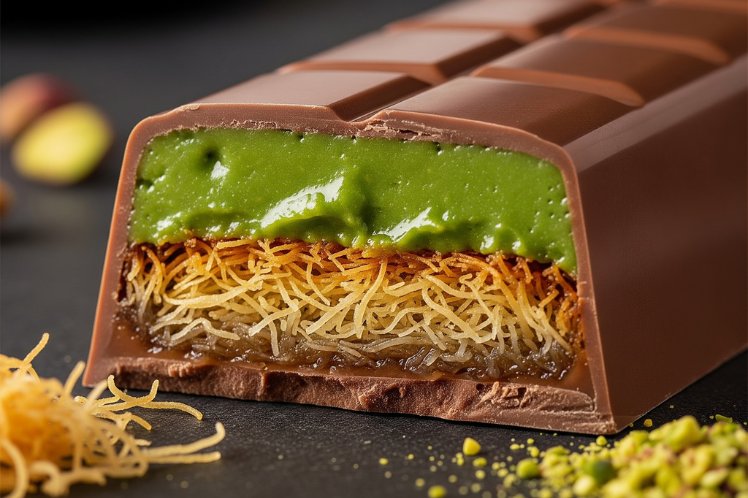
Emirati desserts have always centred around familiar elements are pistachio, dates, dairy, and crisp pastry textures. In recent years, these same flavours have found new expression through Dubai chocolate, a modern dessert trend that reinterprets traditional Middle Eastern sweets in contemporary form.
Rather than replacing heritage desserts like Luqaimat or Knafeh, Dubai chocolate draws directly from them. Pistachio cream, kunafa pastry, and nut-based fillings mirror the flavours long present in Emirati and regional cuisine, offering a modern take that feels both indulgent and recognisable.
What defines Dubai chocolate?
Dubai chocolate is typically crafted as thick, handcrafted bars filled with rich pistachio cream, crunchy kunafa strands, and nut pastes. The emphasis is on texture and contrast, crisp and creamy, sweet yet balanced, reflecting Dubai’s evolving dessert culture while staying rooted in familiar tastes.
Nutrition Snapshot (Dubai Chocolate Bar)
Approx. calories: 450–600 kcal per 150 g bar
Why has it become so popular?
Dubai chocolate resonates because it bridges tradition and innovation. It uses flavours already woven into Emirati desserts, elevates them through premium chocolate-making, and presents them in a format that aligns with Dubai’s contemporary, luxury-driven food scene. For visitors, it offers a glimpse into how local flavours continue to evolve.
Where to try it in Dubai
- FIX Dessert Chocolatier: Known for pistachio-kunafa-filled chocolate bars
- Artisan dessert boutiques across Downtown Dubai and Jumeirah
Tip: Limited batches mean these chocolates often sell out earlier visits improve availability.
Is Dubai chocolate traditional Emirati food?
No, but it reflects how Emirati and Middle Eastern flavours influence modern food trends in the city. Much like Dubai itself, it balances respect for tradition with a forward-looking approach, making it a natural addition to any culinary exploration of the UAE.
Best Traditional Emirati Restaurants in Dubai
Top Picks
- Al Fanar Restaurant & Café – Heritage-style Emirati cooking
- Arabian Tea House & Café – Breakfasts and classic dishes
- Al Khayma Heritage Restaurant – Bedouin-inspired cuisine
- Siraj – Refined Emirati dining
- Logma – Modern Khaleeji comfort food
- Local House – Wide range of traditional dishes
Also Worth Trying (Emerging & Local Favourites)
- Al Banoosh – Local favourite for traditional meals
- Haleeb O Heil – Breakfast trays and Emirati classics
- Malleh Gourmet – Regional Emirati flavours
- Saba’a – Heritage setting with Emirati dishes
Where to Experience Emirati Food in Dubai: top 5 Neighbourhood Guide
Dubai’s Emirati food scene is closely tied to its neighbourhoods. While traditional dishes can be found across the city, certain areas offer a more immersive experience, combining heritage, local cafés, and long-standing restaurants.
Understanding where to explore can help visitors plan their food journey more meaningfully.
1. Al Fahidi Historical Neighbourhood
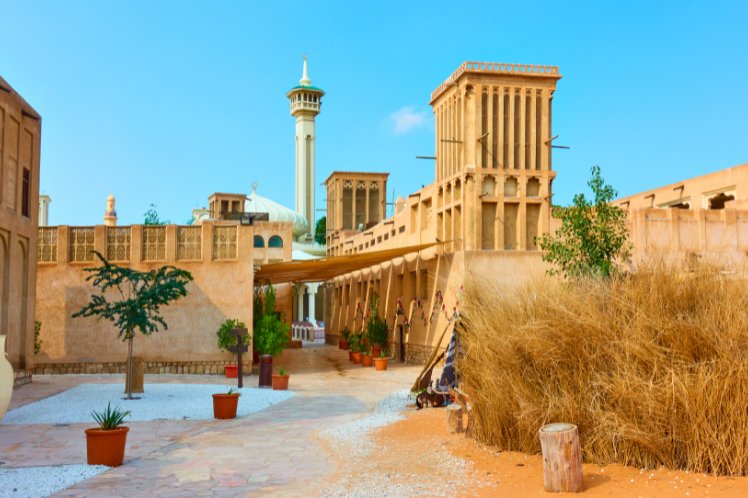
Best for: Heritage dining and traditional cafés
Al Fahidi is one of the best places to experience Emirati food in its cultural context. Home to restored wind-tower houses and quiet courtyards, this area hosts classic spots like Arabian Tea House and Local House. It’s ideal for breakfast dishes such as Chebab and Balaleet, as well as traditional meals like Harees and Machboos.
Why visit: Authentic atmosphere, walkable streets, and a strong sense of history.
2. Deira
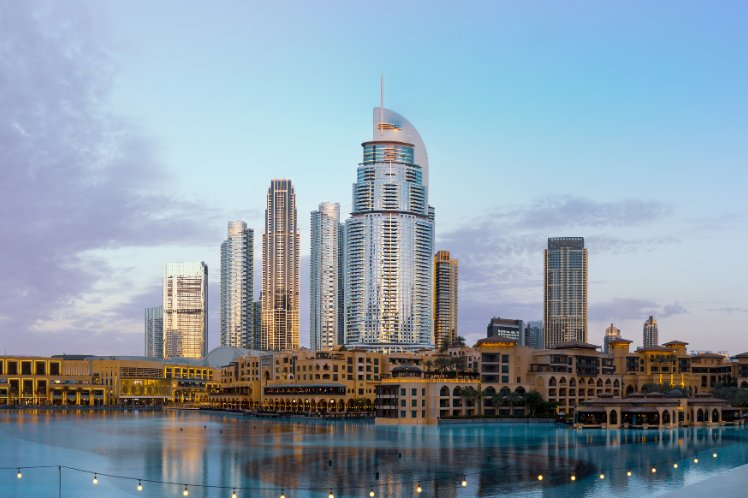
Best for: Classic Emirati flavours and long-standing restaurants
Deira reflects old Dubai’s trading roots and remains a hub for traditional dining. Restaurants here often focus on home-style Emirati cooking, with dishes like Thareed, Madrouba, and slow-cooked stews still prepared using time-honoured techniques.
Travellers interested in old Dubai and Creek-side dining often find stays in Deira practical for accessing traditional restaurants and local markets.
Why visit: Traditional food without modern reinterpretation, especially around the Creek area.
3. Downtown Dubai
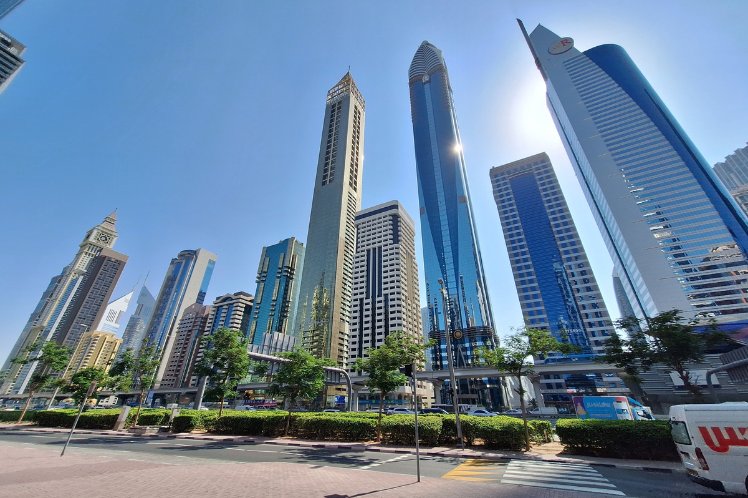
Best for: Refined Emirati dining and modern interpretations
Downtown Dubai offers a more contemporary take on Emirati cuisine. Restaurants like Siraj blend traditional flavours with refined presentation, while nearby dessert boutiques showcase modern trends such as Dubai chocolate. This area is ideal for travellers who want to experience heritage flavours in a polished, urban setting.
Those looking to combine refined Emirati dining with modern attractions may prefer accommodation in Downtown Dubai, thanks to the area’s central location.
Why visit: A balance of tradition, innovation, and iconic city views.
4. Jumeirah
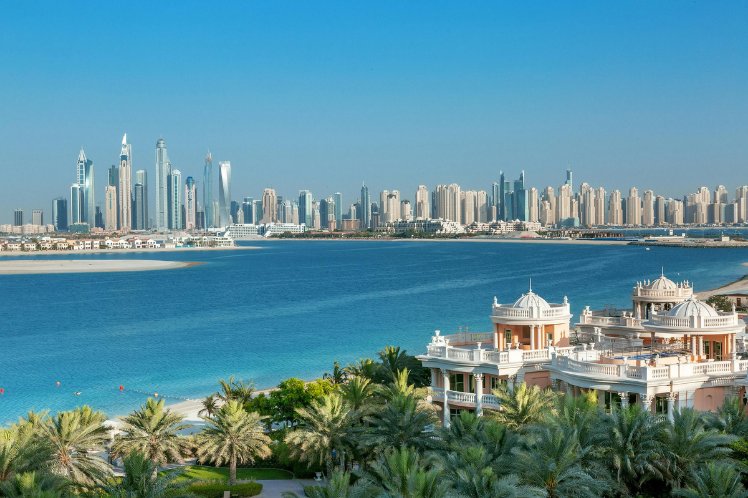
Best for: Casual cafés and local favourites
Jumeirah is known for relaxed dining spots where Emirati food is part of everyday life. From breakfast cafés serving Chebab to restaurants offering Machboos and Luqaimat, this area provides a more local, lived-in food experience.
Jumeirah’s relaxed pace suits travellers who enjoy neighbourhood cafés, and stays in Jumeirah work well for longer, unhurried stays.
Why visit: Easy-going atmosphere and access to neighbourhood cafés.
5. Al Seef
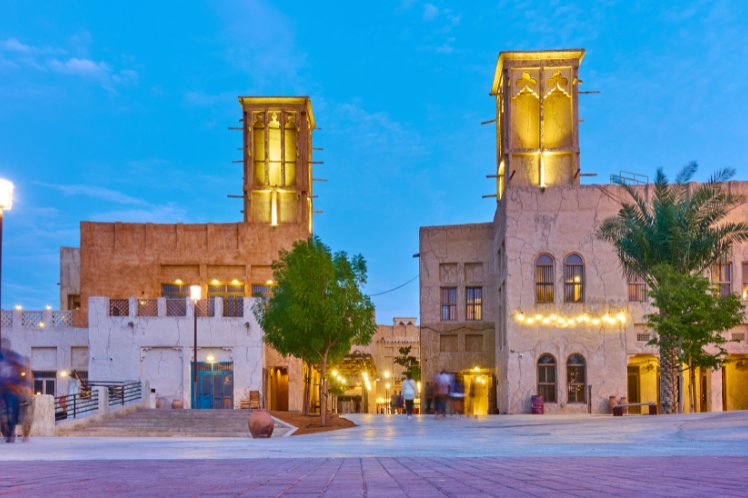
Best for: Cultural ambience with accessible Emirati restaurants
Al Seef recreates the look and feel of old Dubai along the Creek, making it an easy entry point for visitors seeking traditional food in a heritage-inspired setting. It’s a good place to try Emirati classics while combining dining with sightseeing.
Why it stands out: Scenic setting that pairs cultural exploration with traditional meals.
Famous Restaurants in Dubai to try Emirati cuisine
1. Siraj
Siraj is a MICHELIN guide-selected Levantine Emirati restaurant in Dubai. The menu promises authenticity mingled with innovativeness. As for the interiors, it features a gorgeously lit comfy terrace to enjoy your meal.
-
Must-try Dishes:
- Siraj Signature Salad
- Saloona
-
Timing:
- Monday to Friday: 12 pm - 12 am
- Saturday & Sunday: 12 pm - 1 am
-
Best time to visit:
- Visit the place for dinner to enjoy the nightly fountain show.
- Weekends are always busier. For a relaxed dinner, try weekdays during lunch hours.
-
Location:
- Souk Al Bahar, Downtown Dubai
-
How to reach:
- By Metro: The nearest metro station is the Dubai Festival City Metro Station. From there, it's a short walk to the mall and Siraj.
- By Taxi: Taxis are readily available throughout Dubai and can drop you directly at Dubai Festival City Mall.
- By Bus: Several bus routes service the Dubai Festival City area. Check local bus schedules for the most convenient option.
- By Car: If you're driving, there is ample parking available at Dubai Festival City Mall.
2. Logma
Logma offers comfort food in a modernized fashion. Making it is one of the finest eatery cum catering services in Dubai. You will get diverse recipes of the Khaleeji cuisine. From energising hot appetisers to sweet and cold delights to suit every mood.
-
Must-try Dishes:
- Logma Fries
- Knafeh
- Shakshouka
-
Timing:
- Monday to Thursday: 10 am - 12 am
- Friday to Sunday: 10 am - 1 am
-
Best time to visit:
- Visit after sunset for colourful views of Dubai fountains.
- Weekends are busy, but the lively atmosphere will enhance your dining experience.
- Weekdays are a little quieter, so visiting on weekdays can be a good choice.
-
Location:
- Financial Center Road, Downtown Dubai
-
How to reach:
- By Metro: The nearest metro station is the Burj Khalifa/Dubai Mall Metro Station. From there, you can take a taxi or bus to Boxpark.
- By Taxi: Taxis are readily available throughout Dubai and can drop you directly at Boxpark.
- By Bus: Several bus routes serve the Al Wasl Road area. Check local bus schedules for the most convenient option.
- By Car: There is ample parking available at Boxpark, though it might get busy during peak times.
3. Arabian Tea House & Cafe
Arabian Tea House is one of the safest bets to take in divine-tasting Emirati food in Dubai. Running for over 2 decades, it celebrates the Emirati heritage. Be it the Arabic-infused serene decor featuring lace curtains, turquoise seats, and white rattan chairs. Or the genuineness of the techniques—this place stays true to its roots.
-
Must-try Dishes:
- Gahwa (traditional Arabic coffee)
- Breakfast Platter
- Chebab
-
Timing:
- Daily: 7 am - 11 pm.
-
Best time to visit:
- Visit in the morning to enjoy their breakfast platter along with their special tea or coffee.
-
Location:
- Al Fahidi Street (Al Bastakiya)- Bur Dubai
-
How to reach:
- By Metro: The nearest metro station is Al Fahidi Metro Station. From there, it’s a short walk to the Al Fahidi Historical Neighborhood and the cafe.
- By Taxi: Taxis are widely available in Dubai and can drop you directly at the Arabian Tea House & Cafe.
- By Bus: Several bus routes service the Al Fahidi area. Check local bus schedules for the most convenient option.
- By Car: Parking is available in the vicinity of the Al Fahidi Historical Neighborhood, but spaces might be limited during peak times.
-
Tip:
- Avoid the rush by ordering online via Zomato, Talabat, or Eat Easy.
4. Aseelah
Aseelah is an award-winning Emirati restaurant in Dubai. The desirable combo of delicious taste and stunning decor makes it an ideal venue to celebrate life moments. The buffet is well-organised and features diverse top-quality dishes for the guests.
-
Must-try Dishes:
- Baklava
- Shorbat Adas
-
Timing:
- Wednesday to Friday & Sunday: 7 pm - 11 pm
- Saturday: 12.30 pm - 4.30 pm
-
Best time to visit:
- Plan for the Saturday Heritage Brunch.
-
Location:
- Radisson Blu Hotel, Dubai Deira Creek
-
How to reach:
- By Metro: The nearest metro station is Baniyas Square Metro Station. From there, it’s a short taxi ride or a 10-minute walk to the Radisson Blu Hotel. Drop at the Union Station (Red metro line) and walk to the venue.
- By Taxi: Taxis are readily available throughout Dubai and can drop you directly at the Radisson Blu Hotel.
- By Bus: Several bus routes service the Deira area. Check local bus schedules for the most convenient option.
- By Car: There is ample parking available at the Radisson Blu Hotel, although spaces might be limited during peak times.
5. Al Fanar Restaurant & Café
Founded in 2011, this restaurant-cafe is a haven for Dubai's popular food lovers. Every item is made with the freshest local produce and tastes heavenly. The decor is rustic with an alfresco courtyard, which blends well with the cuisine it honours. To add to that, it also has a mini museum aimed at updating visitors about the UAE’s rich culture.
-
Must-try Dishes:
- Chicken kebab
-
Timing:
- Daily: 9 am - 9 pm; 11 am - 11 pm (Al Seef Dubai)
-
Best time to visit:
- Come in the early lunch hours for a shorter wait time.
-
Location:
- The restaurant has 4 branches in Dubai:
- Dubai Festival City
- Al Seef
- Al Barsha
- Expo City Dubai
- The restaurant has 4 branches in Dubai:
-
How to reach:
- Go by car or use the nearest metro station to reach your preferred branch.
6. Local House
Local House is a one-of-a-kind restaurant in Dubai that serves authentic Emirati food and offers a cultural dining experience. Local House was founded to highlight the UAE's unique culinary heritage. It serves traditional dishes produced using locally obtained ingredients, as well as some odd and rare Emirati specialities.
-
Must-try Dishes:
- Camel Biryani
- Al Harees
- Machboos
- Luqaimat
-
Timing:
- Daily: 11:00 AM to 11:00 PM
-
Best time to visit:
- Weekdays: For a quieter experience, visit during weekdays, especially during lunch hours (11:00 AM to 2:00 PM).
- Weekends: Evenings and weekends are busier, providing a lively atmosphere and a chance to mingle with locals and tourists.
-
Location:
- Al Fahidi Historical Neighborhood, Dubai, UAE
-
How to reach:
- By Metro: The nearest metro station is Al Fahidi Metro Station. From there, it's a short walk to the Al Fahidi Historical Neighborhood.
- By Taxi: Taxis are readily available throughout Dubai and can drop you off directly at the Local House.
- By Bus: Several bus routes service the Al Fahidi area. Check local bus schedules for the most convenient option.
- By Car: If you're driving, there are parking facilities available in the Al Fahidi area, though spaces might be limited during peak times.
7. NEEM
NEEM Dubai is a highly regarded restaurant known for its authentic Emirati cuisine and cultural dining experience. Located in the vibrant city of Dubai, NEEM offers a unique culinary journey that showcases the rich heritage and flavours of the UAE.
-
Must-try Dishes:
- Camel Meat Specialties
- Al Harees
- Machboos
- Balaleet
-
Timing:
- Daily: 12:00 PM to 11:00 PM
-
Best time to visit:
- Weekdays: For a quieter experience, visit during weekdays, especially during lunch hours (12:00 PM to 3:00 PM).
- Weekends: Evenings and weekends are busier, providing a lively atmosphere and a chance to mingle with locals and tourists.
-
Location:
- NEEM is located in the bustling area of Jumeirah 1, Dubai, UAE.
-
How to reach:
- By Metro: The nearest metro station is the Financial Centre Metro Station. From there, it's a short taxi ride to Jumeirah 1.
- By Taxi: Taxis are readily available throughout Dubai and can drop you directly at NEEM.
- By Bus: Several bus routes service the Jumeirah area. Check local bus schedules for the most convenient option.
- By Car: If you're driving, there are parking facilities available in the Jumeirah area, though spaces might be limited during peak times.
8. Bait Al Maryam
Bait Al Maryam is a renowned restaurant in Dubai known for its authentic Emirati cuisine and warm hospitality. It offers a traditional dining experience that reflects the rich culinary heritage of the UAE.
-
Must-try Dishes:
- Saloona
- Al Harees
- Machboos
- Balaleet
-
Timing:
- Daily: 12:00 PM to 11:00 PM
-
Best time to visit:
- Weekdays: For a quieter dining experience, visit during weekdays, especially around lunch hours (12:00 PM to 3:00 PM).
- Weekends: Evenings and weekends are busier, offering a lively atmosphere and an opportunity to mingle with both locals and tourists.
-
Location:
- Bait Al Maryam is located in Jumeirah 3, Dubai, UAE.
-
How to reach:
- By Metro: The nearest metro station is Business Bay Metro Station. From there, it's a short taxi ride to Jumeirah 3.
- By Taxi: Taxis are readily available throughout Dubai and can drop you directly at Bait Al Maryam.
- By Bus: Several bus routes service the Jumeirah area. Check local bus schedules for the most convenient option.
- By Car: If you're driving, there are parking facilities available in the Jumeirah area, though spaces might be limited during peak times.
Final Thoughts
Traditional Emirati cuisine is special, with a wide assortment of appetising secrets. So, to taste authenticity, you better not compromise on quality. Savour the must-have Emirati foods from the top restaurants and create unforgettable moments. A special note for travellers who are visiting Dubai for the first time, Dubai has strict rules that need to be followed. Know about the top 10 important rules of Dubai to be followed all the time.
Exploring the traditional food of the UAE in Dubai is a tantalising journey through the rich cultural heritage. These dishes and restaurants will fulfil your wish and make you tick it off your bucket list. Being in Dubai and not trying the authentic food of Dubai makes your trip incomplete.
To make your Dubai experience even more memorable and comfortable, we have Serviced Apartments in Dubai to provide the necessary amenities.
Let us know your thoughts after reading this blog in the comment section!