What You'll Gain From This Blog
- Discover 20 surprising and lesser-known Eiffel Tower facts beyond basic history
- Learn hidden stories and historical secrets from wars, scams, and protests
- Understand engineering marvels and unique structural features
- Explore bizarre and fascinating trivia most travelers don’t know
- Get practical visitor tips for planning your Eiffel Tower experience
- Find best areas to stay near the Eiffel Tower for different travel styles
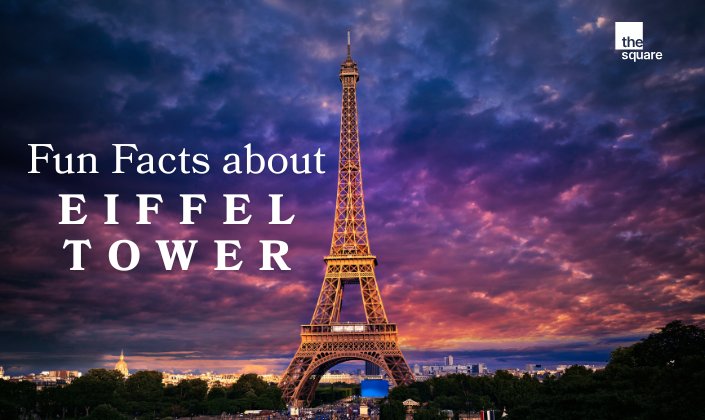
Standing at 330 meters, the Eiffel Tower is one of the world’s most visited monuments. But did you know that before it became the defining symbol of Paris, the Eiffel Tower was chosen from 107 competition entries for the 1889 Exposition Universelle? Chances are, probably not!
And there are more fun facts of Eiffel Tower that many of us don’t know about. For example, the winning proposal for this landmark was submitted by Gustave Eiffel and engineers Emile Nouguier and Maurice Koechlin, in collaboration with architect Stephen Sauvestre.
Here are more interesting Eiffel Tower facts — from wartime secrets to engineering marvels.
Fun Facts About the Eiffel Tower: Origins & History
Let us take a closer look at some of the best facts about the Eiffel Tower, many of which are still unknown.
1. Barcelona Rejected the Eiffel Tower First
One of the lesser-known Eiffel Tower facts is that Gustave Eiffel reportedly pitched this tower first to Barcelona for the 1888 Universal Exposition. However, the proposal was turned down as an ugly eyesore by the Spanish authorities. So, it was not originally intended to be built in France. This probably cleared the way for Paris to accept the design for the fair in 1889.
2. Chosen from 107 designs
It was the winning design for a competition to build a 300-meter iron structure as the grand entrance for the Paris World’s Fair in 1889. This would commemorate the French Revolution’s centennial. One of the most interesting facts about the Eiffel Tower is Gustave Eiffel’s project, chosen from 107 entry proposals, for its contemporary and bold idea of using iron to build a high-rise landmark. The project was meant to be a symbol of French industrial skill and knowledge.
3. It Was Nearly Called the Bonickhausen Tower
You will be stunned to know one of the other fun facts about the Eiffel Tower, namely that it was almost called the Bonickhausen Tower. Gustave Eiffel was born with the name Alexandre Gustave Bonickhausen, a name that had roots in Germany. However, he was fearful about his German surname causing political issues and legally changed his name to Eiffel in 1879 (inspired by the Eiffel Mountains in Germany, where his family emigrated from). If he hadn’t changed his name, then you would have gone to visit the Bonickhausen Tower!
4. Designed by Engineers, Not Eiffel
One of the fun facts about the Eiffel Tower is that it was actually designed by engineers and not Gustave Eiffel himself. Although he was the key mastermind behind the tower, the structural design was actually made by two senior engineers, Maurice Koechlin and Emile Nouguier, who worked in his company. The former sketched the first idea of a great pylon, consisting of four lattice girders. Architect Stephen Sauvestre was onboarded later on to integrate the famous base arches.
5. 300 Artists and Writers Tried to Stop It
In 1887, there was a Committee of 300 artists and intellectuals set up, which signed the ‘Protest Against the Tower of Monsieur Eiffel.’ This committee, surprisingly, had famous names like Guy De Maupassant and Alexandre Dumas. They called it a useless and monstrous addition to the landscape of the city.
6. It Was Designed to Be Torn Down
One of the most interesting facts about the Eiffel Tower is that it was never meant to be a permanent addition to the city skyline. It was originally granted a 20-year permit with the intent to dismantle it in 1909 (when the ownership would go back to the City of Paris). However, by 1903, the tower was already being used as a sky-high lab for radio transmission and meteorological observations, ultimately saving it from dismantling.
7. It Helped Win World War I
One of the iconic facts that remains embedded in Eiffel Tower history is that it helped win the First World War. It was a prime military asset during World War I, with enemy correspondence from Berlin being intercepted by its radio transmitter station. This offered vital intelligence to the French Army, enabling the Allies to build the decisive counter-attack at the time of the Battle of the Marne in 1914. The station also played a vital role in uncovering iconic spies, such as Mata Hari.
8. 72 Names Are Engraved Around the First Floor
Interestingly, the names of 72 French engineers, scientists, and mathematicians were engraved in gold letters on the tower’s first floor by Gustave Eiffel. This move was aimed at commemorating their timeless contributions to engineering and science between the years 1789 and 1889. The names are arranged along the tower’s periphery today, while paying tribute to the country’s industrial and intellectual genius of yore.
Eiffel Tower Facts — Engineering & Structure
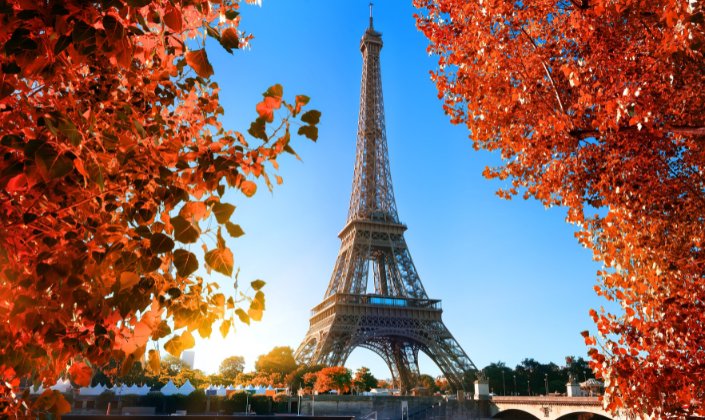
Now that you know some of the Eiffel Tower's history and facts, here are some fascinating engineering and structural aspects that will amaze you.
9. It Grows in Summer
The Eiffel Tower is often called a living monument. This is because it changes its size since it is crafted with wrought iron. It expands in the summer and contracts in the winter. Thermal expansion may lead to the tower growing by up to 15-18 cm approximately. The iron structure may move away from the sun by up to 18 cm owing to thermal expansion on the side that faces it.
10. Painting System
The tower is repainted every seven years to safeguard the iron from oxidation and requires around 60 tons of paint. The process takes approximately 18 months and involves 25 painters working entirely by hand.
The color is not uniform; to ensure consistency, the paint shade comes in three hues. The darkest shade is at the bottom, while the lightest hue is at the top. Throughout its history of 130+ years, the tower has been repainted 20 different times. It began as a dark red landmark in 1889, evolving to yellow-ochre in 1889, and then settling on the customized Eiffel Tower Brown that is visible today.
11. No Major Fatalities During Construction
One of the most heart-warming Eiffel Tower facts is how there were no major fatalities during the construction of the tower. Given its huge scale and height, the construction process was surprisingly secure. Eiffel took stringent safety measures like guardrails, movable gangways, and screens. Only one worker passed away during the construction period of two years, which was a major accomplishment for large-scale 19th-century engineering projects.
12. The Elevators Travel 103,000 km Every Year
One notable fact to know is that the tower’s elevators are a huge engineering marvel by themselves! Some of the 19th-century hydraulic machines are still in use, and with 7 million people visiting annually, they usually work overtime. Interestingly, they travel a combined distance of roughly 103,000 kilometers annually (over 2 ½ times the Earth’s circumference)!
13. It Has a Secret Underground Bunker
There is a secret underground bunker below the tower’s South pillar that was originally built at the time of construction. It was ultimately used as a military radio station and bunker during the wars. While it is restricted to the public, there are rumors of a secret tunnel linking this bunker to the Champ de Mars. This is a hidden and historical connection to the wartime past of Paris.
14. It Survived Being Sold for Scrap - Twice
A con artist called Victor Lustig successfully sold the iconic tower in 1925 for scrap metal. Interestingly, this happened not once, but two times! He was able to convince local dealers that the city of Paris could not afford to pay for its maintenance. The scam was so outrageous that the first dealer, who was embarrassed to report his loss, enabled Lustig to try the scam once again on another individual.
The Most Surprising Fun Facts About the Eiffel Tower
Here are some of the most surprising Eiffel Tower facts that you certainly didn’t know about!
15. Photographing Nightly Sparkling Lights Is Technically Copyrighted
You may know about the fabulous nightly light display where a whopping 20,000 sparkling bulbs sparkle for about five minutes at the top of every hour after dark. The bulbs were installed in 2000 to celebrate the new millennium. This is classified technically as an artistic work and has its copyright safeguarded by SETE. While personal or social media usage is usually overlooked by the authorities, SETE permission is needed for commercial usage/photography of this show.
16. There's a Private Apartment at the Top
One lesser-known feature of the Eiffel Tower is a private apartment at the top, built by Gustave Eiffel for himself. This was a hideaway approximately 276 meters (906 feet) above ground and was furnished with oil paintings, luxurious rugs, and a grand piano. He hosted special guests here, like Thomas Edison in 1889, and it was closed for several years to the general public. However, it has been restored ever since, and you can now view it on your visit.
17. A Woman Married It
One of the interesting facts about La Tour Eiffel is that an American woman called Erika LaBrie even married it in a commitment ceremony in 2007! Bizarrely, she believed in forming deep physical and emotional relationships with inanimate objects. She still calls herself Erika Eiffel.
18. Hitler Ordered Its Destruction, a General Refused
You wouldn’t have been able to see the Eiffel Tower today if Hitler had his way! Yes, Adolf Hitler ordered the destruction of the Tour d'Éiffel during the German occupation of Paris. The task was given to General Dietrich von Choltitz to destroy not just the city, but also the Eiffel Tower. However, the general, who was the military governor of Paris at the time, disobeyed Hitler’s order and left the monument standing. Earlier, the French soldiers had severed the lift cables, thereby forcing the Nazi troops to climb the tower’s steps.
19. It May Be Worth More than 400 Billion Euros (Estimated)
The Eiffel Tower is technically priceless as a global symbol or landmark. Several studies have often tried to estimate the value of the tower, putting it at almost 400 billion Euros. This valuation, if considered a correct estimate, will make the Eiffel Tower a whopping six times more valuable in comparison to even the Colosseum in Rome. Of course, the valuation may account for the tower’s huge impact on branding and tourism.
20. A Pilot Once Flew Through Its Legs and Crashed
Another shocking fact is that a French pilot named Leon Collot (sometimes called Collet) died while attempting a stunt in January 1926. He took on a bet that he could successfully fly his biplane through the Eiffel Tower’s legs. While he navigated between the legs, he failed to glimpse the radio antenna cables linked to the tower. The wires clipped his plane, leading to a fatal crash and explosion.
Planning Your Visit — What You Need to Know
Planning your visit to the Eiffel Tower? Here’s what you need to know in this regard.
- You should book your Eiffel Tower tickets for the summit elevator as they usually sell out 30–60 days in advance, especially during peak months from April to September.
- Don’t miss the nightly light show where the tower sparkles for 5 minutes on the hour every hour from dusk till 1 AM. The best viewing spots include the Champ de Mars Park or the Trocadero Plaza.
- Arrive a little before sunset for the best nighttime and daytime views, with early mornings on weekdays being slightly less crowded.
- Tickets are available for the stairs (2nd floor only and more affordable) or elevators (going to the 2nd floor or top).
- Be aware of pickpockets and keep your belongings secure. Security checks are also compulsory, so arrive as early as you can.
- Try to stay near Eiffel Tower so that you can enjoy late night excursions without pressure of getting back in time.
- If you want a special trip experience, book Madame Brasserie on the first floor or the Jules Verne restaurant on the 2nd floor in advance.
- You can use the Metro Line 9 from Trocadero or the Line 6 from Bir-Hakeim to get to the Eiffel Tower easily. Another option is the RER C (Champ de Mars-Tour Eiffel).
Where to Stay Near the Eiffel Tower
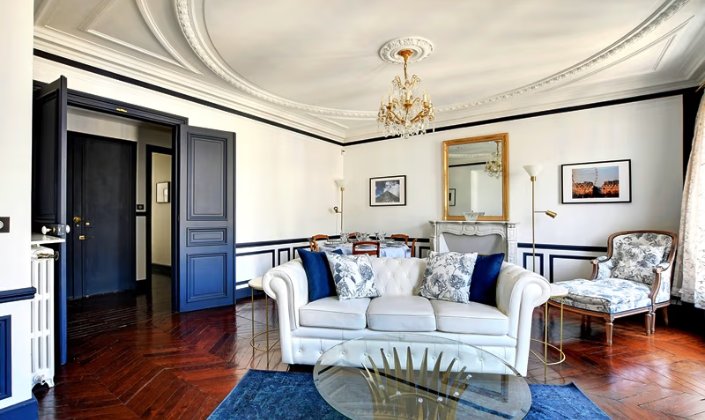
Planning to experience these facts in person? The neighborhood you choose makes all the difference in Paris. On that note, here are the top areas to stay near the Eiffel Tower.
- 7th Arrondissement (Champ de Mars): The 7th arrondissement is the closest and most popular location if you want to be a few steps away from the Eiffel Tower. This is a safe, premium, and residential area that also gives you access to the lush green Champ de Mars. It is ideal if you’re a first-timer who wants iconic views, while there’s close proximity to the Musée d’Orsay, Rodin Museum, and Rue Cler Market Street. The 7th arrondissement is located within a 5–10 minute walk of the Eiffel Tower and offers some of the best direct views of the monument
- 16th Arrondissement (Trocadero): This location offers the best tower views and is a luxurious district that’s known for its vantage points for photography, particularly from the Trocadero Plaza. You’ll find the area ideal for romantic getaways and uninterrupted tower views. Some key attractions here include the Palais de Chaillot, Trocadero Gardens, and the Avenue de Camoens.
- 15th Arrondissement: This 15th Arrondissement is suitable if you want a more affordable stay with a local vibe and quieter ambience. The 15th is where you’ll find a Parisian vibe with more affordability. The Rue de Grenelle shopping stretch is a key attraction, along with the Parc André Citroën and local Boulangeries.
Final Thoughts
The Eiffel Tower is more than just a landmark — it’s a symbol of engineering innovation, history, and Parisian culture. Whether you're visiting for the first time or returning, these fun facts of Eiffel Tower offer a deeper appreciation of one of the world's most iconic monuments.
The Eiffel Tower attracts nearly 7 million visitors annually, making it one of the world’s most visited paid monuments. On that note, plan your trip and experience the magnificent wonder yourself.
FAQs
1. When was the Eiffel Tower built?
Construction of the Eiffel Tower started on January 26, 1887, with the completion on March 31, 1889. It took slightly more than two years.
2. Why was the Eiffel Tower built?
The Eiffel Tower was built as the entrance arch for the Exposition Universelle or World’s Fair in Paris in 1889.
3. How tall is the Eiffel Tower?
The Eiffel Tower height is about 330 meters or 1,083 feet, inclusive of the antennas on the top.
4. Who built the Eiffel Tower?
The Eiffel Tower was built by Gustave Eiffel’s (the project mastermind) engineering firm, with the structural design by the engineers Emile Nouguier and Maurice Koechlin. Architect Stephen Sauvestre was also a part of this project.
5. Is it illegal to photograph the Eiffel Tower at night?
The daytime image is in the public domain, while the light show that was installed in 1989 it is copyright-protected. Legally, publishing the nighttime photographs without permission is prohibited. However, this is rarely enforced for casual tourists, with social media or personal usage being largely overlooked. Yet, commercial photography is prohibited for the nightly show.
6. How many steps does the Eiffel Tower have?
The Eiffel Tower has 1,710 steps to the summit, although visitors can only access 674 steps up to the second floor.
7. What is the Eiffel Tower made of?
The Eiffel Tower is built with 18,038 pieces of puddled iron (high-purity iron), in addition to 2.5 million rivets.
8. Where is the best place to stay near the Eiffel Tower?
Some of the best places to stay near the Eiffel Tower include the 7th arrondissement with its stunning views, and also the 15th or 16th arrondissements.