
What You’ll Gain From This Blog
- Understand UK visa routes and essential documents.
- Plan moving costs, rent, deposits and monthly expenses.
- Compare London areas by budget, commute and lifestyle.
- Find suitable short-term accommodation before permanent housing.
- Navigate banking, healthcare, transport and other essentials.
- Avoid common mistakes when relocating from Singapore to London.
Moving to London from Singapore is a major transition, whether you are relocating for work, university, family or a new lifestyle. The move means trading one global city for another, but settling in can feel very different.
From navigating UK visa requirements and budgeting for London’s housing costs to choosing a neighbourhood and finding your feet in a new city, there is plenty to consider before you make the move.
This guide covers what to know before moving from Singapore to London, including visa requirements, living costs, accommodation, neighbourhoods and the essential steps to take before and after arrival.
What to Know Before Moving from Singapore to London
A successful relocation starts well before the flight. With our Singapore to London relocation guide, we aim to make the process easier for you.
Check Your UK Visa and Travel Requirements

The immigration route you need depends on your nationality, why you are moving to London, how long you plan to stay and your eligibility. Check the latest requirements on the official UK government website before making travel or relocation arrangements.
- For work: The Skilled Worker route is the main option for eligible jobs with an approved UK sponsor. Other work routes may apply depending on your role and circumstances.
- For study: A Student visa may be required for an eligible course with a licensed UK education provider.
- For family: A Family visa may apply if you are joining an eligible partner or family member in the UK.
- For recent graduates: The High Potential Individual (HPI) route may be available if you graduated from an eligible overseas university and meet the other requirements. It does not lead directly to settlement.
Depending on your visa route, you may need a valid passport, proof of your employment or university admission, financial evidence, and documents relating to your family or immigration status. Check the specific document requirements for your application before submitting it.
Arrange Travel Insurance
Travel insurance can help cover certain medical emergencies, travel disruptions, and lost belongings, depending on the policy. Check your healthcare entitlements before travelling, and make sure you understand what your insurance covers.
Plan Your Finances Before Moving
Relocating from Singapore to London involves more than the cost of your flight. Visa fees, healthcare charges, temporary accommodation, rent, deposits, transport and everyday expenses can all add to your initial outlay. Planning these costs in advance will give you a clearer picture of how much you need before you arrive.
Your total relocation budget will depend on your visa route, accommodation, airfare, belongings, and whether you already have a job and permanent home in London. Start by accounting for these key expenses:
- Visa and healthcare: If your visa requires the Immigration Health Surcharge (IHS), most adult applicants currently pay £1,035 per year. Skilled Worker visa fees for applications made from outside the UK currently start at £819 for a visa of up to three years, although the exact amount depends on the visa route and your circumstances.
- Flights: Budget for a one-way flight from Singapore to London, along with any excess baggage or additional luggage charges.
- Initial accommodation: If you have not secured a permanent home, factor in the cost of temporary accommodation for your first few weeks. A serviced apartment can provide flexibility while you view properties and decide where you want to live.
- Rent and deposit: When renting in England, you may need to pay rent in advance and a refundable tenancy deposit. For most properties with annual rent below £50,000, the tenancy deposit can be up to five weeks' rent. Your actual upfront payment will depend on the property and tenancy agreement.
- Everyday living costs: Allow for groceries, local transport, mobile services, utilities and other essential expenses while you settle in.
- Emergency savings: Aim to keep at least three months of essential living expenses as a financial buffer, particularly if you are moving without a confirmed job or permanent accommodation.
Before booking your move, calculate these costs separately rather than relying on a single relocation estimate. This will help you understand how much cash you need for the move itself and how much you should keep available for your first few months in London.
Where Should You Stay When Moving from Singapore to London?

Choosing where to stay during your first few weeks in London can make your relocation much easier. If you have not yet found a permanent home, temporary accommodation gives you time to explore neighbourhoods, understand your commute and view properties in person before committing to a longer-term rental.
Why Consider Temporary Accommodation?
Arranging a long-term rental from Singapore can be difficult when you have not yet seen the property or experienced the neighbourhood for yourself. It is also important to understand which area suits your lifestyle as well as fits your schedule in terms of commute to work or university.
There is also a risk of rental scams, particularly when prospective tenants are asked to transfer money for properties they have not properly verified.
Choosing temporary accommodation in London when relocating from Singapore can therefore give you time to:
- Visit potential properties before signing a tenancy.
- Compare neighbourhoods and commuting options.
- Check practical details such as heating, noise, natural light and the condition of the property.
- Understand your monthly budget before committing to a long-term rental.
- Get familiar with local shops, transport links and essential services.
Consider a Flexible Short-Term Stay
A serviced apartment can be a practical option for the first few weeks of your relocation. Unlike a hotel room, a furnished serviced apartment typically provides more living space and may include facilities such as a kitchen and workspace, making it more suitable for a longer stay.
For people relocating for work or moving with family, this can provide a comfortable base while they search for a permanent home. It also gives you the flexibility to explore different parts of London before deciding where you want to live long term.
When comparing temporary accommodation, consider its location, transport connections, length-of-stay options, what is included in the rate, and whether the apartment has the facilities you will need for work and everyday life.
Understand the Costs of Renting in London
Once you are ready to look for a permanent rental, make sure you understand the upfront costs before signing a tenancy agreement.
In England, a landlord or letting agent can generally ask for a refundable tenancy deposit of up to five weeks' rent. You should also check which utilities and other household costs are included in the rent and which you will need to pay separately.
If you are renting in England, your landlord must also carry out the appropriate Right to Rent checks before the tenancy starts.
Taking time to understand these requirements can help you avoid unexpected costs and make the transition from temporary to permanent accommodation smoother.
Open a UK Bank Account for Everyday Expenses
A UK bank account can make everyday life easier after you move, particularly when you need to receive your salary, pay rent and household bills, or set up regular payments. However, eligibility and account-opening requirements vary between banks.
You will typically need proof of identity, such as a passport, and may also need proof of your UK address. Depending on the bank and account, you may be asked for information about your employment, income and tax status. MoneyHelper notes that banks commonly ask for identification and proof of address, although the documents accepted can vary.
If you have just arrived and do not yet have a permanent UK address, check the requirements of your chosen bank before applying. Some banks provide options for people who have just relocated to London.
When transferring savings from Singapore to the UK, compare the exchange rate, transfer fees, and any charges that may be applied by the receiving bank. For a large transfer, check the total amount you will receive in pounds rather than looking only at the advertised transfer fee.
How Much Does It Cost to Live in London After Moving from Singapore?
The cost of living in London after moving from Singapore should be understood in more detail before making the shift. Here is a basic guide that may help:
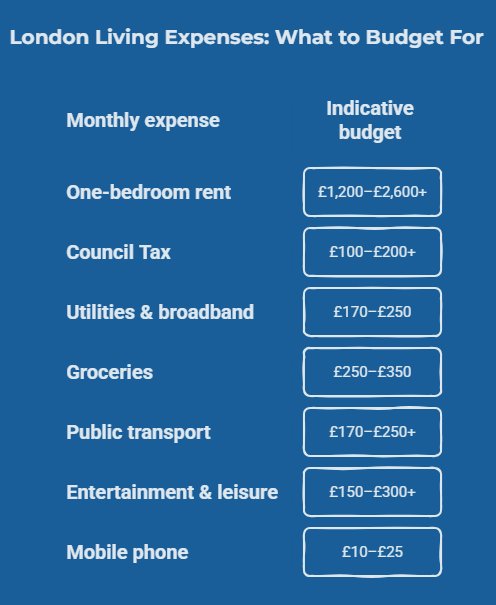
For a single professional renting a one-bedroom property, a realistic starting budget can be around £2,000–£4,000+ per month, depending largely on rent, location, and lifestyle. For families, rent can be higher, so you should budget extra for that.
You can learn about the cost of living in London in detail here.
What are the best areas to live in London?

Finding the right neighbourhood to live in London for the long haul is essential. The right area depends on where you work, your budget, commute and preferred lifestyle. Some of the top choices include:
- Canary Wharf: A practical choice for professionals working in finance and other corporate sectors, with restaurants, shops and waterfront spaces. The Jubilee and Elizabeth lines make it well connected to other parts of London, although rents can be high.
- Westminster: Living in Westminster puts central London offices, government buildings, landmarks and cultural attractions close by. It suits those who value location and convenience, but housing costs are typically higher.
- Hammersmith: Hammersmith combines residential streets with restaurants, shops and strong transport links. The District, Piccadilly, Hammersmith & City and Circle lines make it convenient for commuting across west and central London.
- Stratford: With several major transport connections, Stratford offers plenty of amenities without being in central London. The Elizabeth and Jubilee lines, DLR and National Rail services provide connections across the city.
- Greenwich: Greenwich has a more relaxed feel, with Greenwich Park, the Royal Observatory, markets and independent shops. DLR and National Rail services connect it with central London and Canary Wharf, making it possible to combine a quieter setting with access to major business districts.
- South Bank: South Bank puts riverside walks, restaurants, theatres and galleries within easy reach, while Waterloo and London Bridge offer major transport connections. Its central location can mean higher housing costs, but it can be appealing if you want to spend less time commuting and more time in central London.
Interns and young professionals can check our guide to areas in London as they move from Singapore and make a well-informed decision.
What Is Different About Living in London Compared with Singapore?

Moving from Singapore to London can feel familiar in some ways, but the day-to-day experience is different.
- Housing: London generally offers more neighbourhood and property choices, but space can be smaller for the price, especially centrally. Check the floor area, storage, heating, and what is included before renting.
- Transport: London uses the Underground, Elizabeth line, Overground, DLR, buses and National Rail. Contactless payment is widely accepted, but check your commute and monthly travel costs before choosing where to live.
- Weather: Expect colder winters, shorter winter days and more changeable weather. Warm layers and a waterproof jacket will come in handy.
- Cost of living: Rent, Council Tax and commuting can make up a large part of your budget, so compare your expected take-home pay with actual living costs.
- Everyday life: Banking, healthcare, utilities and other essentials may take a little time to set up, so leave some flexibility during your first few weeks.
What Should Families Know Before Moving?
If you are moving to London with children, choose your home and school together. The neighbourhood you pick can affect school options, commuting time and your daily routine.
Before moving:
- Research schools early: Compare state and independent schools near the areas you are considering.
- Check admissions: Requirements, deadlines and application processes vary, so check directly with the school or relevant local authority.
- Think about the daily commute: Consider the journey to school, work and childcare rather than looking at each location separately.
- Budget beyond rent: Include childcare, school-related costs, transport and extracurricular activities.
What Should You Do After Arriving?
Once you arrive in London, focus on the practical details that will make your first few weeks easier.
- Sort your essentials: Keep your passport, visa documents, tenancy or accommodation details, and important contacts accessible.
- Set up payments: Open a UK bank account if needed and arrange a mobile plan. You will also need a reliable way to pay for everyday expenses and transport.
- Check your healthcare options: Find a nearby GP and check the registration process that applies to you.
- Get familiar with your commute: Test your route to work or university before committing to a permanent home.
- Set up your new home: Once you move in, check your tenancy agreement to see which utilities are included and arrange any remaining accounts.
- Handle official tasks: Check whether you need a National Insurance number and complete any required registration or immigration steps.
Common Mistakes to Avoid
Here are some common mistakes that you should avoid when relocating from Singapore to London.
- Underestimating your initial budget: Include rent, deposits, transport, utilities, and unexpected costs.
- Choosing a home without checking the commute: Consider travel time and transport costs before signing a tenancy.
- Rushing into a long-term rental: Explore the area and inspect the property before committing.
- Ignoring Council Tax and household bills: Include these in your monthly budget.
- Moving without an emergency fund: Keep a financial buffer for the first few months.
- Shipping too many belongings: Check whether your furniture and appliances are suitable for your new home.
- Trying to arrange everything before arrival: Some decisions are easier once you understand your neighbourhood and routine.
Final Thoughts
Moving to London from Singapore is easier when you take it one decision at a time, starting with your visa, finances, accommodation and location. You do not need to have your permanent home figured out before you arrive.
A short-term base can give you breathing room to understand your commute, explore neighbourhoods and get a realistic feel for London’s day-to-day costs. Serviced apartments in London can be a practical option during this transition, giving you a comfortable place to settle while you work out where you want to live long term.
FAQs
Do Singapore citizens need a visa to move to London?
How much money do I need to move from Singapore to London?
Is London more expensive than Singapore?
Where should I stay when first moving from Singapore to London?
What should I do first after moving from Singapore to London?